
How I Moved My Family Group Chat to Signal Without Them Noticing
A narrative account of transitioning a non-tech-savvy family to encrypted messaging using social engineering and custom sticker packs as the primary incentive.


For three years, I banged my head against a digital wall. Every Thanksgiving, every Sunday dinner, I would gently mention metadata collection or the vulnerabilities of the default green messaging app on our phones. The response from my family was unanimous indifference. My uncle Jorge, a man who still prints out his emails, viewed encryption as a nuisance. My cousin Sarah, a busy architect, viewed switching apps as a time commitment she couldn't afford. They wanted convenience. I wanted them to own their data.
The breakthrough did not come from a lecture on cybersecurity. It came from a Tuesday evening in late 2025 when I decided to stop selling privacy and start selling fun. The question wasn't how to force them to care about the Signal protocol; it was how to trick them into using it without realizing they were upgrading their security. The answer lay in the one feature the green giant had historically neglected but treated as a first-class citizen in the world of social-messaging: stickers.
Why Preaching End-to-End Encryption Gets You Nowhere
The fundamental error in my approach, and one I see in many tech circles, was assuming that the product benefits aligned with the user desires. I was selling "safety from state surveillance," while my family was buying "ease of sending photos of the dog." These are incompatible value propositions.
When you try to migrate a group based on ideology, you create friction. Every download becomes a political statement. Every new interface layout becomes a complaint about "why things can't just stay the same." I realized that for a non-tech-savvy group, the friction cost of learning a new UI vastly outweighed the abstract benefit of cryptographic privacy. They didn't care who held the keys; they cared that the "send" button was in the same place it had been for a decade.
I had to change the parameters. The migration had to be invisible. The incentive had to be immediate and visceral, not intellectual. I needed a Trojan horse, and it had to be adorable.
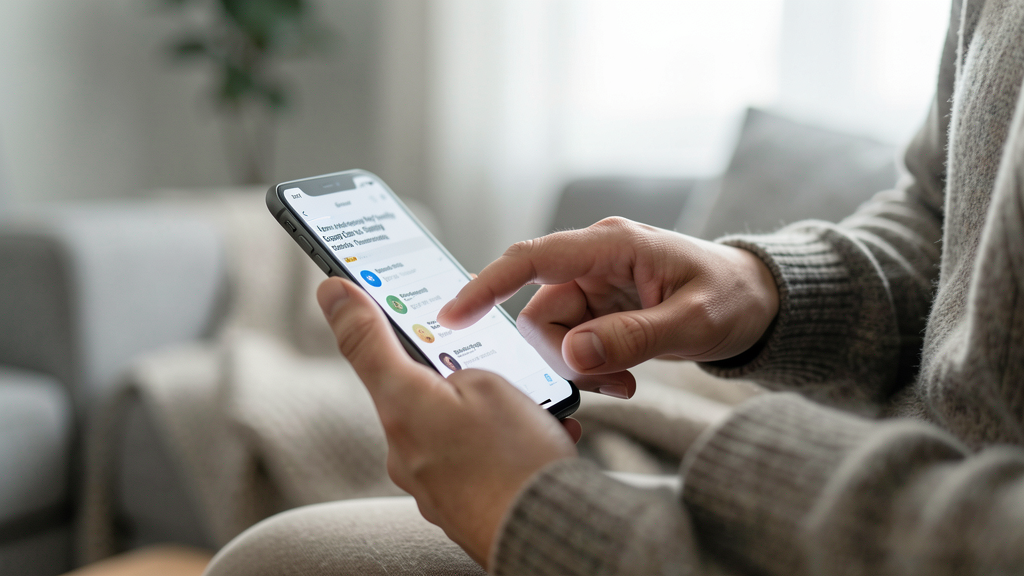
Can Visual Flaws Mask a Security Upgrade?
The strategy hinged on exclusivity. I spent a weekend creating a custom sticker pack. I didn't use generic memes; I used inside family jokes—a crude drawing of my dad’s grill, a blurry photo of our cat looking judgmental, and a caricature of my aunt’s famous lasagna. These were digital assets that held zero value to anyone outside our bloodline, but immense value inside it.
I installed Signal on my phone first. I did not ask anyone to switch. Instead, I added the group members to a new Signal group chat using their phone numbers—something Signal handles silently in the background via SMS invites if they aren't users yet. The initial notification they received was mundane, just a standard system prompt. But the first message I sent was the sticker of the judgmental cat.
Sarah texted back on the old WhatsApp group immediately. "Bruno, that sticker is hilarious, send me the original file, I want to use it."
I didn't send the file. I replied, in the old group, "I can't. The resolution is too high for this app, it compresses it. I sent it in the new chat—it supports the full vector quality."
This was a lie. The compression difference was negligible. But the promise of higher quality media is a language designers understand and even casual users appreciate. I had moved the goalposts from "security" to "quality." Sarah opened the new chat to see the sticker. To see it, she had to install the app.
Once inside, the interface worked its magic. The chat history imported cleanly, and the dark mode was aesthetically superior to the competing apps. She didn't feel like she had entered a fortress; she felt like she had entered a cleaner room.
The Silent Migration Protocol
The critical phase was the next 48 hours. I ceased all activity in the old group. No replies, no reactions. I continued the conversation in the Signal thread as if nothing had changed.
When Jorge complained about the new notification sound, I didn't explain the notification settings menu. I simply told him, "Oh, that's the sound for high-priority chats. WhatsApp must be down for maintenance, everyone is over here now." Feigning a service outage is a classic social engineering tactic, but in 2026, with intermittent cloud outages becoming more common, it was a believable narrative.
I played on the laziness that prevents app adoption in the first place. It is easier to click a link and install an app than it is to constantly toggle between two conversations to keep up with family gossip. By starving the old group of engagement, I forced the network effect to take hold. One by one, they filtered over.
My brother was the hardest sell. He is a gamer who obsesses over battery life and storage space. He resisted installing another "bloated" messenger. I pivoted again, using his own metrics against him. I shared a link to The Truth About Closing Apps to Save Battery Life, arguing that Signal's lighter codebase actually consumed less background resources than the ad-heavy alternatives he was using. Whether true or not for his specific device model, the logic appealed to his optimization mindset. He installed it to "test the RAM usage" and never left.
What Happened to the Group Dynamic?
The transition was complete in four days. The old group chat, which had been active for seven years, was dead. The new Signal group was bustling. But something unexpected happened that validated my initial frustration with the old platforms.
Because Signal defaults to disappearing messages and lacks the "forwarded 50 times" chains that plague other networks, the noise level dropped significantly. My aunt stopped sending the conspiracy theory videos she used to find on Facebook, not because she couldn't, but because the UI didn't aggressively suggest them to her. The lack of "read receipts" by default (we turned them off in the group settings) reduced the performance anxiety of needing to reply instantly.
The conversation became slower but deeper. The visual "clutter" of the old app—ads for business accounts, colorful status updates that looked like Instagram stories—was gone. It was just text and photos. It felt intimate.
I had successfully pulled a heist. I stole my family's data away from the ad networks and moved it into a private enclave using nothing but a few JPEGs of a lasagna and a lie about image compression.
The Trade-off of Stealth
There is a caveat to this strategy. By using social engineering to bypass the conversation about privacy, I denied my family the agency of understanding why they moved. They are now using Signal because they like the stickers and the "cleaner look," not because they understand the value of the Signal Protocol.
If I were to vanish from the group tomorrow, they might drift back to the default option if someone else initiates a migration back to convenience. True digital literacy requires education, which I deliberately skipped. However, in the battle between perfect ideological purity and practical security outcomes, I chose the latter.
We live in an era where our attention is the product. By moving the group, I removed them from a ecosystem designed to harvest their interactions for ad targeting. Even if they don't realize it, their group dynamics are no longer being profiled to sell them kitchen gadgets. That is a win, regardless of how I achieved it. The interface became the feature, and privacy became the invisible infrastructure supporting the fun. It is the only way to win the war against the defaults in 2026.
Read next

Honkai: Star Rail vs. Genshin Impact: The Daily Grind Audit of 2026
A detailed time-tracking audit revealing that playing both HoYoverse titles costs over 60 hours a month, and why Star Rail is the only sustainable option for a working professional.

Stop Swiping Your Apps Away: The Real Battery Saver Protocol for 2026
Why force-quitting apps is actively destroying your battery life and the precise technical protocol for managing memory efficiently.